Disney Era Analysis – Big Hero 6
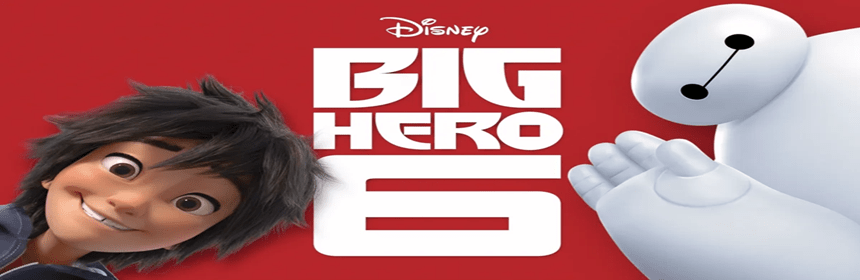
As mentioned in the first blog post in this series, I’ll be writing analysis content on all 60+ Disney animated feature films and their film making eras.
The seventh era is the Revival Era, which ran from 2009 to 2019 and started with The Princess and the Frog. As mentioned in a previous blog post, the Revival Era is known for: its return to the “old formula” (storytelling similar to the Renaissance Era), improved and advanced computer-generated (CG) animation, evolution in its storytelling by adapting stories from sources other than old books, and well thought-out stories paired with improved animation.
So how well did Big Hero 6 measure up to these famous features?
Return to the “old formula” (storytelling similar to the Renaissance Era):
This film returned to the “old formula” in the following ways:
- The film’s story focused on not only the loss of parents, but Hiro losing his older brother, and the associated grief of those losses. These losses and themes echo those in The Lion King.
- The found family theme and characters in many of the Renaissance Era films are present in Hiro’s relationship with Tadashi’s four best friends, who in turn become his friends and found family.
Improved and advanced computer-generated (CG) animation:
According to the film’s Wikipedia page, a software program called, Denizen, was used to create over 700 distinctive characters that populate the city. Whereas, another program, Bonzai, was responsible for the creation of the city’s 250,000 trees, and a new rendering system called Hyperion offered new illumination possibilities.
According to the film’s IMDb page, the world that the animators created for this film is bigger than that of Tangled, Wreck-It Ralph, and Frozen combined.
My favourite animation moments in this film were the animation of the Microbots demonstration, Hiro’s face against Baymax’s vinyl showing the metal architecture underneath, and the design and animation inside the portal.
Evolution in its storytelling by adapting stories from sources other than old books:
This film is the first Disney animated feature film to feature Marvel Comics characters, whose parent company was acquired by Disney in 2009. The film is based on the Big Hero 6 characters of the same name, who made their first appearance in Sunfire & Big Hero 6 #1 in 1998.
Well thought-out stories paired with improved animation:
According to the film’s Wikipedia page, Marvel Entertainment’s then-Chief Creative Officer, Joe Quesada, stated that the film’s story, specifically the relationship between Hiro and Baymax had a “very Disney flavour to it, but it was combined with Marvel heroic arcs.”
The design of Baymax was based on the film’s crews’ desire to have a robot that they had never seen before and be wholly original. Animator, Lisa Keene, came up with the idea of a huggable robot. Sources of inspiration for Baymax’s design came from Japanese anime, Pokémon, and Shogun Warrior toys. Baymax’s design was also inspired by a field trip the film’s crew took to Carnegie Mellon University’s Robotics Institute, where they met a team of researchers who were pioneering the new field of ‘soft robotics’ using inflatable vinyl.
The film’s Wikipedia page also states that the film’s animation style was a combination of Eastern World culture (predominantly Japanese) with Western World culture (predominantly California). Disney’s decision to merge Tokyo (where the comic book version of the story takes place) with San Francisco was due to San Francisco not having been used by Marvel before, and they felt that San Francisco’s aesthetics would blend well with Tokyo, hence San Fransokyo was born. According to the film’s IMDb page, the city’s design was inspired by the cities featured in the films, Akira, Ghost in the Shell, Tekkonkinkreet, and the illustrations of Tadahiro Uesugi.
According to the film’s IMDb page, Baymax’s movements and posing was modelled after studying the movement of a baby with a full diaper, and the production team watched videos of fire ants as inspiration for the movement of the Microbots.
My overall thoughts:
Overall, I enjoyed this film immensely. I felt it was unique compared to the previous films in the Era up to this point, due to its Marvel Comics origins, and its futuristic and technological setting.
What I appreciated about the film was that despite its futuristic and technological setting, it was also deeply human and relatable. The exploration of Hiro’s grief via his relationship with Baymax was beautifully written, and also paralleled well with the plot twist of the true villain and the motives for their actions. I also felt that the villain’s motive was an interesting twist in itself – they weren’t money hungry or a psychopath, rather human and grieving themselves.
Whilst this film is contemporary in a similar way to Wreck-It Ralph, I felt that this film in comparison contained more emotional depth.
The next part of the Disney Era Analysis series will focus on Zootopia.
Fun Facts and Trivia (according to the film’s IMDb page):
- This is the first Disney film to only show the title of the movie at the end and not the beginning.
- When Honey Lemon’s supersuit is created, her purse displays a miniature version of the periodic table of the elements.
- Hiro Hamada was born in 2018.
- Hans from Frozen can be seen on the most wanted board at the police station.
- The film takes place in 2032.
- Over 200 different signs were created for the advertisements in San Fransokyo.
References:

