Pixar Era Analysis – Hoppers
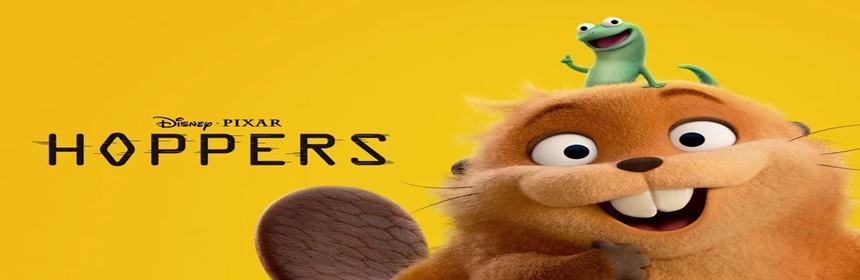
As mentioned in a previous blog post, I’ll be writing analysis content on all (as of October 2026) 31 of Pixar’s animated feature films and their film making eras.
The fourth era is the Personal Era, which is the current Era, and started in 2020 with Onward. As mentioned in a previous blog post, the Personal Era is known for its film releases being affected by the COVID-19 pandemic, its films being based on the personal lives of the directors and writers who were making them, and its varied animation.
So how well did Hoppers measure up to the above features of the Personal Era?
Release being affected by the COVID-19 pandemic:
Hoppers’ release was not directly affected by the COVID-19 pandemic.
Being based on the personal lives of the directors and writers making the film:
In May 2024, Pixar Chief Creative Officer, Pete Docter, announced that Pixar would be pivoting away from personal stories in their animated feature films, in favour of films that would be universally appealing.
Whilst predecessor film, Elio, was the first film released after this strategy announcement, it was heavily based on Adrian Molina’s own childhood. I’d say Hoppers is the first film to implement this new strategy, based on its environmentalism themes and mixed human/animal protagonists. The film’s inspiration is also not personally based, as it was inspired by nature documentaries in which robot animals are placed in the animal world.
Varied animation:
According to the film’s IMDb page, the film’s crew wanted to keep the style, design and animation of the animals as realistic as possible, whilst still making them funny, relatable and identifiable. In contrast, the designers of the robotic beaver wanted her movements to feel authentic to a physical machine, and managed to make this happen by studying the specific cam and lever systems of the retired America Sings geese and rabbits.
When it came to the film’s nature backdrop, the animators were aware of the visual noise that can arise from moving trees and water, and found a way to simplify the background without losing any of its texture.
The animation and design of the scenes towards the end of the film were inspired by old horror films, something that I was even able to pick up on as I watched it.
My overall thoughts:
I enjoyed this film very much for a variety of reasons – the humour in Mabel and Jerry’s antagonistic relationship, the heartfelt backstory of Mabel’s relationship with her grandmother, the unique personalities of all the characters, the beautiful animation (which reminded me a lot of Turning Red), and the film’s theme of connection emphasised in both the human and animal worlds.
The film’s IMDb page stated that Pixar’s executives thought that the comedy style of the film was a bit “too much” for their standards. However; Andrew Stanton, Lee Unkrich and Pete Docter defended Daniel Chong’s vision for being unique, loving the direction and bonkers premise, and recognising it would be a new leap for audiences. Ultimately, I felt that Chong’s vision paid off, especially for the first non-personal film of the Personal Era.
Fun Facts and Trivia (from the film’s IMDb page):
- The tortoise in the tank at the beginning of the film is called “Crush”, most likely a link to the Finding Nemo films.
- When George is applying his oils onto Jerry, Jerry comments on how something smells like vanilla. This is a nod to the fact that the castor extract from beaver glands used to be used in vanilla scents and flavouring.
- The ideas on Dr Sam’s board at the end of the film reference designs, characters and concepts from Pixar’s past films.
- Dr Sam’s friendship with Mabel is similar to Marty McFly and Dr Emmet Brown in the Back to the Future trilogy, as they are both duos of a teenager and an eccentric scientist.
References:

