Disney Era Analysis – Moana
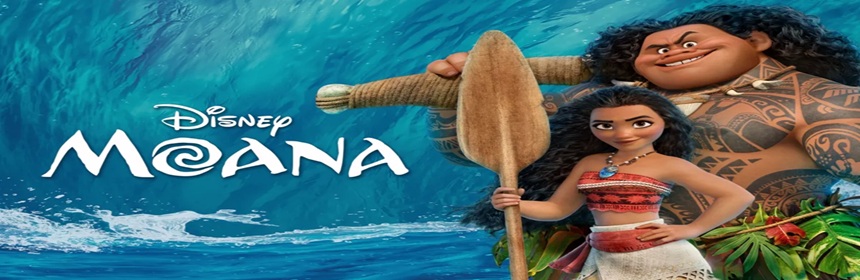
As mentioned in the first blog post in this series, I’ll be writing analysis content on all 60+ Disney animated feature films and their film making eras.
The seventh era is the Revival Era, which ran from 2009 to 2019 and started with The Princess and the Frog. As mentioned in a previous blog post, the Revival Era is known for: its return to the “old formula” (storytelling similar to the Renaissance Era), improved and advanced computer-generated (CG) animation, evolution in its storytelling by adapting stories from sources other than old books, and well thought-out stories paired with improved animation.
So how well did Moana measure up to these famous features?
Return to the “old formula” (storytelling similar to the Renaissance Era):
This film returned to the “old formula” in the following ways:
- Moana is on a journey to self-discovery
- The film is Broadway musical-like
- Moana is an official Disney Princess and the first since Mulan to have her name in the title of her film.
- The film references Pocahontas – Chief Tui echoes a scene in which a fatherly chief acknowledges his daughter by saying “it suits you” when referring to Moana’s role as a leader in the village, and in the song, “Shiny”, Tamatoa mentions Moana’s grandmother saying “listen to your heart”. Like Pocahontas, Moana is a Disney Princess that is also part of a tribal civilisation.
- In the beginning of the film, baby Moana walks up to the ocean, and she and the ocean cock their heads similarly to the way Kala and baby Tarzan did in Tarzan.
- This is the first film directed by John Musker and Ron Clements to have an oceanic setting since The Little Mermaid.
- The scene with Tui singing “Where You Are” to Moana is reminiscent of the Little Mermaid scene with Sebastian singing “Under the Sea” to Airel. Even the motivation is the same as they try convince their respective protagonists to stay at home as leaving would be dangerous.
Improved and advanced computer-generated (CG) animation:
According to ACMI, Disney developed a software program called Splash, to simulate the behaviour of different types of water, which is on display with the ocean’s movements and the fact that it is its own character.
Disney also restructured its technical animation pipeline to accurately and realistically simulate the behaviour of Moana’s long, thick, curly hair.
My favourite animation moments in the film included: the animation of the ocean as a whole, the animation of Tala’s spirit in stingray form travelling through the ocean to guide Moana, the animation of Maui’s tattoos, the animation of Moana slow-motion walking to meet Te Ka, and the animation of Moana’s vision of her ancestors.
Evolution in its storytelling by adapting stories from sources other than old books:
Whilst Moana is an original story, it does draw inspiration from Polynesian mythology. To conduct thorough and proper research, as well as to be as authentic as possible, the film’s crew researched Polynesian culture, travelled to South Pacific islands, and the film itself consisted of a largely Polynesian cast.
Well thought-out stories paired with improved animation:
According to the film’s Wikipedia page, Moana is Ron Clements’ and John Musker’s first fully computer-animated film, and that one of the reasons for using computer animation was that the environment, including the ocean, benefited much more from the use of CG animation, as opposed to traditional animation.
According to the film’s IMDb page, Maui’s tattoos are hand-drawn, which makes Moana the first Disney animated feature film since Winnie the Pooh to feature hand-drawn animation.
The film’s Wikipedia page also states that the animation crew consulted with the Polynesian Voyaging Society over references of material culture, like ship parts, so their textures would be rendered realistically in the final cut.
My overall thoughts:
Overall, I enjoyed Moana’s premise of a strong, powerful young woman on a journey to self-discovery, especially with the support of her grandmother and her ancestors. I appreciated the film crew’s efforts and dedication to authenticity through their behind the scenes work and research. I also appreciated and loved the beauty of the Polynesian and oceanic setting, and the design and animation that brought it to life.
However, I did feel that the plot did drag on a bit at times, especially with Maui’s backstory, the conflict between Maui and Moana just before the emotional climax, and the scenes and musical number involving Tamatoa.
The next part of the Disney Era Analysis series will focus on Ralph Breaks the Internet.
Fun Facts and Trivia (according to the film’s IMDb page):
- Lin-Manuel Miranda stated that the character of Tamatoa the Giant Crab was a tribute to David Bowie.
- In real life, the decorator crab glues mollusc shells and invertebrates, like sea anemones and sponges, onto its shell.
- Moana was the first Disney film dubbed into Māori. The Māori version, Moana Reo Māori, is available in Australia and New Zealand, as well as on Disney Plus.
- During Moana’s vision of the voyagers, the leader’s necklace appears to be a combination of the necklaces worn by Moana’s father and grandmother.
- In sailing tradition, tattoos of a pig and rooster are symbols of good luck to prevent drowning, as the wooden cages in which the animals were kept would often float during a shipwreck, giving the animals or any hangers on a higher survivability rate. It is therefore fitting that the sailor Moana be accompanied by Heihei and Pua.
- Maui says to Moana “if you wear a dress, and have an animal sidekick, you’re a princess”. This is common for the heroine of a Disney story.
- This film was Auli’i Cravalho’s (Moana) acting debut.
- When he first gets his hook back and is trying to shapeshift, Maui changes into various animals. For a split second, he turns into Sven the Reindeer from Frozen.
- No other human characters meet Maui except Moana.
- Tamatoa is the only non-human character to speak in the film.
References:

