Disney Era Analysis – Winnie the Pooh
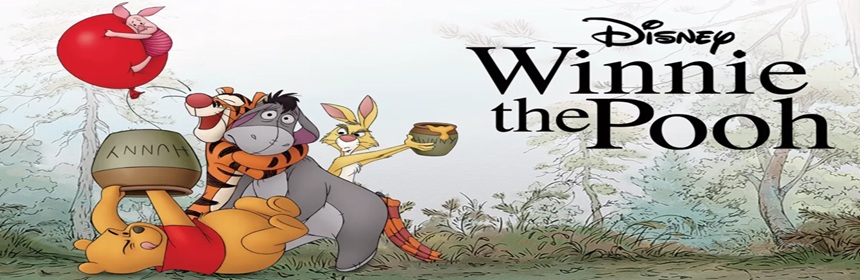
As mentioned in the first blog post in this series, I’ll be writing analysis content on all 60+ Disney animated feature films and their film making eras.
The seventh era is the Revival Era, which ran from 2009 to 2019 and started with The Princess and the Frog. As mentioned in a previous blog post, the Revival Era is known for: its return to the “old formula” (storytelling similar to the Renaissance Era), improved and advanced computer-generated (CG) animation, evolution in its storytelling by adapting stories from sources other than old books, and well thought-out stories paired with improved animation.
So how well did Winnie the Pooh measure up to these famous features?
Return to the “old formula” (storytelling similar to the Renaissance Era):
This film returned to the “old formula” in the following ways:
- Being purely traditionally animated (2D, hand-drawn).
- Having musical elements and songs sung by the characters.
Improved and advanced computer-generated (CG) animation:
As of 2026, this film is Disney’s most recent traditionally animated (hand-drawn) feature film, with all animated feature films following this one being entirely computer-generated and animated.
Evolution in its storytelling by adapting stories from sources other than old books:
According to the film’s Wikipedia page, the stories that were adapted for this film were from the two original Winnie the Pooh book series by A.A. Milne – Winnie the Pooh and The House at Pooh Corner, as well as Return to the Hundred Acre Wood, a sequel to A.A. Milne’s series, by David Benedictus. A.A. Milne’s two books were published in 1926 and 1928 respectively, whilst Benedictus’ book was published in 2009.
According to the film’s Wikipedia page, the initial plan was to feature five stories from the A.A. Milne books, before the final cut of the film ended up drawing inspiration from three stories – Eeyore Loses a Tail and Pooh Finds One (from Winnie the Pooh), Rabbit Has a Busy Day (from The House at Pooh Corner), and the chapter, In Which Pooh Goes in Search of Honey (from Return to the Hundred Acre Wood).
Well thought-out stories paired with improved animation:
According to the film’s Wikipedia page, the decision to use traditional (hand-drawn) animation in lieu of CG animation was explained by director, Stephen Anderson:
“If this (the film) were a fully CG-animated and rendered and lit Pooh, it just wouldn’t feel right. We would be doing the characters a real disservice.”
Considering that the previous films in the Disney’s Winnie the Pooh franchise were traditionally animated, as well as the time the stories were published in and the nostalgic vibes that the story and its characters provide audiences, I feel that Anderson made the right call. Despite the majority of the film being traditionally animated, there was minor CG animation present in the live action opening, with CGI books used, with the hand drawn characters in the book’s text.
According to the film’s IMDb page, the animators’ drawings of the Backson were inked with wide-tipped felt markers and given a rough texture in post-production to make them look like chalkboard drawings.
My favourite animation moments in this film included but were not limited to: the shaking of the book to get Pooh out of bed, the design of and animation inside the beehive, the cuckoo clock with Pooh and a “Hunny” pot as the cuckoo, Rabbit’s thought bubble of a way to get out of the pit, Eeyore using the anchor as a tail, and Pooh and the other characters’ interactions with the text from the book and within the book itself.
My overall thoughts:
According to the film’s IMDb page, it’s theorised by many that this film was used as a “budget film” to fill space in between Disney’s schedule due to its much lower budget, short runtime, and the fact that it was released alongside the final Harry Potter film. Whilst this is never been confirmed and from my research, and in fact appears to not be the case, due to the passion for it behind the scenes, I do believe these qualities are why it didn’t perform as well commercially, especially as I wasn’t aware of this film in Disney’s animated feature film canon, whereas I saw its predecessor (Tangled) when it was released in cinemas, and I saw its successor (Wreck-It Ralph) for the first time a few years ago. I also believe these qualities make this film the outlier of the Revival Era.
I did enjoy this film, I found it to be very sweet and charming. I especially loved the humour, Pooh’s interaction with both the storybook’s text and narrator, and the live action bedroom serving as a bookends for the film. I also appreciated the post-credits scene with the twist of the Backson being real but friendly, and someone who most likely would have fit in with the other characters, if they ever met.
The next part of the Disney Era Analysis series will focus on Wreck-It Ralph.
Fun Facts and Trivia (according to the film’s IMDb page):
- The end credits include the delightful line, “no stuffed animals were hurt in the making of this film.”
- The opening song features a slightly changed Hundred Acre Wood map. At the bottom of the map, it says “Drawn by me” (implying Christopher Robin). On the second page, it says, “with help from Mr. Shepard”. The original artist of the Winnie the Pooh books was E.H. Shepard.
- At 63 minutes, this is the second shortest Disney animated feature film, the first being Saludos Amigos, which has a 42 minute runtime.
- This is the first Disney animated feature film to have a post-credits scene since Brother Bear.
References:

