Book Analysis – How it Works…The Computer
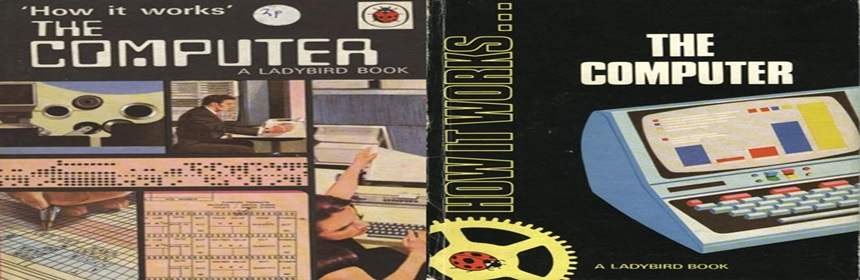
At a local book fair earlier this year, I came across a random find that I thought was a fun little novelty (pardon the slight pun), How it Works…The Computer.
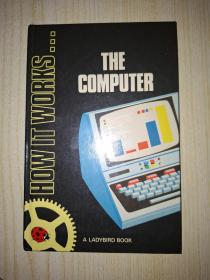
The image on the book’s cover alone let me know that it was published in the past, and I was right, it was published in 1979, and was a revised edition, the first being published in 1971.
It’s a short book as its target audience is children, something the book itself makes clear before a reader starts its journey through its content, with the following encouraging preface:
“If you are interested in computers, their function and operation, but are discouraged by their complexity, you should read this book. It deals as simply as possible with the principles and does not delve too deeply into electronics. The combination of carefully-written text and instructive illustrations should give older students a good basic knowledge of what computers are all about.”
Reading this book through a 2025 lens makes it more interesting and poignant, even from the first page, when the book asks the question, ‘what are computers?’
“There is something about computers that is both fascinating and intimidating…Many people think of them as almost-human machines with ‘brains’ that allow them to think.
“In fact, computers do not have brains and they cannot really think for themselves…They are automatically controlled and do the work of many human beings at fantastically high speeds. The really important thinking is done by the humans who feed them with information and program them to perform particular operations with the information they are given.”
When reading that first page, my thoughts immediately went to AI.
The book goes on to provide a brief history of computers by providing details on how they developed, and then goes on to explore their different designs, data processing, the main parts of a computer and how they combine to work the way that they do, computer code, and the input unit.
The book’s age shows on the pages that provide details on recording information on magnetic surfaces, such as cassettes and diskettes (storage methods that have since become obsolete), as well as subsequent further information on the operation of the magnetic tape unit, storage options, and the capacity of computer storage (the book states that most computer systems have between 16 and 256 thousand words capacity and is constantly increasing), and the magnetic core store.
The book also provides details on teleprocessing, the closest thing to the internet in 1979.
The last page, ‘This Year, Next Year, Sometime…?’ is the most interesting, providing a prediction of sorts of the future of computers.
“The use of computers is growing year by year and their design is changing almost as quickly. What was up-to-date five years ago is out-of-date today, and what is the latest thing today will be old-hat in five years’ time.”
The page goes on to detail its then-current and common use and application of computers, which interestingly, didn’t include the home or schools. The page and the books ends with an incredibly accurate prediction:
“The future will see much more compact machines doing an even greater variety of intricate jobs.”
Due to the 1979 edition being an amended edition, I wanted to find the 1971 edition and see how different it was, and what had changed with computers in the eight years between editions. I managed to find the 1971 edition, thanks to the Internet Archive.

Reading both books, I noticed the following differences:
- Images of various computers and their parts being replaced in the 1979 edition to sleeker and even mini options, illustrating the change to more compact designs over the eight years between editions.
- The 1979 edition emphasises that a computer helps a business’ productivity and efficiency, whereas the 1971 edition implies that a business would be able to get along without one, and would only purchase and use a computer if it makes the business more profitable.
- In the 1971 edition, the storage section focused on magnetic drums, in the 1979 edition, magnetic discs and tapes are emphasised as the main computer file storage options.
- The 1971 edition emphasises that number or letter code is the one specific way to enter information into a computer, the 1979 edition emphasises that code can be entered via a punched card or magnetic tape.
- The ‘Reading the Code’ page in the 1971 edition was replaced in the 1979 edition with the heading ‘The Input Unit’, and focused on document reader or character recognition systems, and visual display units. It also touched on the evolution of card reading systems.
- The ‘Recording Information on Magnetic Tape’ page in the 1971 edition was placed in the 1979 edition with the heading ‘Recording Information on Magnetic Surfaces’ and talked about recording and storing information on magnetic diskettes and cassettes.
- The 1979 edition lists additional high-level languages for programming that the 1971 version didn’t: BASIC (Beginners All-purpose Symbolic Instruction Code), PL1 (Programming Language One), and RPG (Report Program Generator).
- The output unit page shows that the revolving wheels needed to print data had been reduced from 160 to 132.
- The Teleprocessing page wasn’t in the 1971 edition.
This book was part of a series, Series 654. Other books in this series included (How it Works…): The Motor Car, The Aeroplane, The Rocket, The Television, The Locomotive, The Motor Cycle, The Hovercraft, The Camera, Farm Machinery, The Ocean Liner, The Telescope and Microscope, Printing Processes, The Telephone and, Making a Transistor Radio. I managed to find digital copies of some of these books on the Internet Archive as well, and you can find links to them below.
 Loveday Writing