Behind the Reviews – Edition #34 (Charmed Analysis)
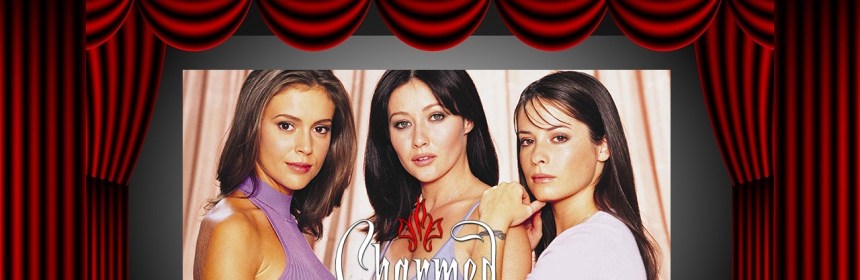
In the previous edition, I spoke about why I write TV show analysis pieces and provided more details on why I wrote Marital and Gender Roles in The Brady Bunch and House Husbands, Case Studies in Abnormal Psychology, and Exploration of the afterlife on television: Upload vs The Good Place. This edition will focus on the three analysis pieces I’ve written about Charmed.
Even though I’ve published reviews on the Charmed (Reboot), the three analysis pieces I wrote focused on episodes in the original series.
This analysis piece focuses on “Morality Bites”, a season two episode which revolves around Prue, Piper and Phoebe travelling 10 years into the future after Phoebe gets a premonition of herself being burnt at the stake.
I wrote this analysis piece as I felt it stood out due to the fact that it focused on the Ripple Effect, and how it was displayed through the sisters’ personal morality around the choices they (or rather their future selves) made over the decade (which their present selves have no memory of). I wrote about how the Ripple Effect started in the episode, how it affected each sister, and how it affected the world around them.
I also wrote about the lessons that the sisters learnt after experiencing the various Ripple Effects, especially Phoebe, who ultimately accepted her fate as she learnt that she (and Prue and Piper) can’t use their magic to punish the guilty. When the sisters returned to the present, Prue decided to take the night off from work after discovering that her future self was a ruthless and lonely workaholic, Piper decided to embrace her relationship with Leo despite them being divorced in the future, and Phoebe told them that they can’t use their magic for revenge.
Charmed and the Trolley Problem
This analysis piece focuses on “Apocalypse Not”, another season two episode, this time revolving around Piper and Phoebe having to work with, who are later revealed to be, three of the Four Horsemen of the Apocalypse, to rescue Prue and another Horseman who are trapped in a vortex.
I wrote that the philosophical Trolley Problem first presents itself at the beginning of the episode when Phoebe reads out a version of the Problem to Prue and Piper from a book she bought from her sociology professor. The version of the Problem was “if a building was on fire, would you save five strangers or one sibling?” Prue and Piper quickly answer “sibling”. This minor, theoretical version of the Trolley Problem foreshadows the major, very real Trolley Problem Piper and Phoebe will face later.
The major, very real Trolley Problem that Piper and Phoebe face is whether they rescue Prue or not because if they do, it also means they are rescuing the missing fourth Horsemen and they can carry out their plan to bring on the apocalypse. What I found interesting about this exploration of the Trolley Problem is how much emotions played a role in Piper and Phoebe’s determination to rescue Prue. While their guardian angel/whitelighter, Leo, tries to convince them otherwise, even referencing what happened to them in “Morality Bites”, making the point that there are sometimes more important things than saving their sister, despite this Piper and Phoebe decide to go through with their plan.
When Phoebe gets a premonition from one of the other Horsemen and realises what the full extent of rescuing Prue will mean, she refuses to go through with their plan, with Piper reluctantly following her lead. This leads to the Source of All Evil opening the vortex, Piper and Phoebe being able to rescue Prue, and the Source vanquishing the Horsemen for failing their mission.
The lessons that the sisters have learnt from having to deal with a real Trolley Problem are presented in the episode’s final moments when one of Piper’s employees comes up to them at P3 with Phoebe’s book, and asks them the same theoretical question Phoebe asked at the beginning of the episode. This time the sisters’ answer to the question is to save five strangers.
Charmed and Neutrality: Why neutral beings in Charmed fail
This analysis piece was actually a four-part series, due to its length and my choice to focus on three key neutral magic beings in Charmed: the Angel of Death, the Cleaners, and the Avatars.
In the first part of the series, I did a deep dive on the role of the Angel of Death in the Charmed universe and its grand design, how neutral he really was, and how he failed in his agenda/objectives.
The second part of the series focused on the Cleaners, their role within the Charmed universe, how neutral they really were, and how they failed in their own agenda/objectives.
The third part of the series was an even deeper dive with the exploration of the Avatars as, unlike the Angel of Death and the Cleaners, had a half-season long story arc in season seven which explored their role and how they failed in their agenda/objectives, whereas the Angel of Death and the Cleaners only had a few standalone appearances.
The final part of the series provided a deeper look into how and why all three neutral beings failed in their agenda/objectives.
I wrote Charmed and the Ripple Effect and Charmed and the Trolley Problem as I felt that they explored the sisters’ personal morality and philosophical beliefs more than any evil being they would typically fight. In fact, “Morality Bites” is one of very few episodes that doesn’t have the sisters fighting with evil beings, while “Apocalypse, Not” sees the sisters working together with evil beings. “Apocalypse, Not” shows how Piper and Phoebe struggled internally and morally over whether to save Prue because they love their sister, or sacrifice her to save the entire world, and how that struggle affected their mindset and decision making. I also enjoyed these two episodes on a personal level, due to them being about more than just the classic and constant “good vs evil fight”.
I wrote Charmed and Neutrality: Why neutral beings in Charmed fail as I felt that the neutral beings in Charmed were some of the most interesting characters in the show. Whilst the good vs evil fight in its many forms is fun to watch, I found that the agendas/objectives of each neutral being was more compelling, and the Avatars story arc examined the affect that the good vs evil fight has on both magic and humanity. In fact, the Avatars were regarded as a “neutral big bad”, but they were only a “big bad” as their agenda/objectives go against the sisters’ magical and moral beliefs.
Behind the Reviews – Edition #35 will be released next week and will focus on the Write from My Childhood analysis pieces.
 Loveday Writing