Disney Era Analysis – The Many Adventures of Winnie the Pooh
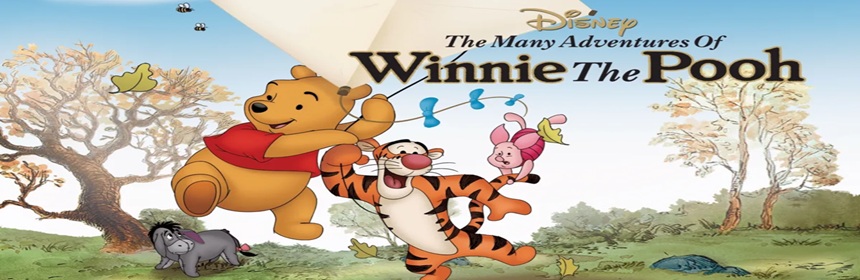
As mentioned in the first blog post in this series, I’ll be writing analysis content on all 60+ Disney animated feature films and their film making eras.
The fourth era is the Bronze Age, which ran from 1970 to 1988 and started with The Aristocats. As mentioned in a previous blog post, the Bronze Age is also known as the “Dark Age,” as the films during this era were the first ones made after Walt Disney’s death.
Without Walt Disney’s creative direction, the animators tried new things with the animation style during this era, which ended up being criticised as cheap and lazy, due to their use of xerography and recycling animation. As well as the heavy use of xerography and recycling animation, this era is also known for its darker and edgier films, which were the brainchild of the then-new generation of animators from Cal Arts.
So how well did The Many Adventures of Winnie the Pooh measure up to these famous features?
Use of xerography and recycling animation:
The black outlines of the characters and scenery associated with the use of xerography are visible in this film, although an interesting tidbit about the art style of the film that I found on the film’s IMDb page, is that all the backgrounds for the film were outlined in ink to keep with the sketchy style of the original Ernest Shepard illustrations. The film’s IMDb page also states that the Disney artists wanted to use Shepard’s works for the movie but Walt Disney said that they had to create and use their own work.
In regards to recycled animation, this can be seen where Rabbit tries to push Pooh through his door before he goes to get Christopher Robin (taken from 101 Dalmatians), and when Christopher Robin is walking with Pooh towards the end of the film (taken from The Jungle Book), I also noticed that the bee that appeared was also recycled from The Jungle Book. As well as recycled animation, Disney also recycled its cast with actors from previous films cast in this one: Sebastian Cabot, Bruce Reitherman, and Sterling Holloway being obvious stand outs in this regard.
My personal favourite animation moments in this film included the animation of the characters and writing in the book (especially during the rain and flood scenes making the words in the book melt), Pooh accidentally busting his stitches (and the animation leading up to that moment referencing the fact that he is a stuffed teddy bear), and Pooh’s head having to catch up to his spinning body.
Being a darker and edgier film:
This film is clearly not dark and edgy, in fact it’s the complete opposite with its bright, wholesome and innocent nature. However, you could say Rabbit being lost in the forest was a darker moment as it showed his fear, and the colour palette and animation were darkened to emphasise it.
My overall thoughts:
Overall, I found the film to be very sweet, however I did admittedly find myself tuning out at times, not because it was boring, but rather because it was clearly an anthology or packaged film. However, I appreciate the crew’s efforts to tie the films together as one story from a book, and animating and writing it accordingly.
I appreciated the wholesome and sweet nature of the film, and the varying animation from the watercolour backgrounds to the surrealist-like setting and action in Pooh’s dream sequence. This film, with its meta and musical nature, as well as being an anthology, reminded me of films from previous Eras, specifically, the Wartime Era.
I read on the film’s IMDb page that it was the last anthology film in Disney’s animated feature film canon. Due to this, I feel it’s an outlier film, which is something I haven’t come across in my Disney Era Analysis series since Fantasia. It will be interesting to see how this film will eventually compare with the others in this Era.
The next part of the Disney Era Analysis series will focus on The Rescuers.
Fun Facts and Trivia (according to the film’s IMDb page):
- This is the first Disney film to be an anthology film since The Adventures of Ichabod and Mr. Toad.
- This is the first Disney film to not feature a main antagonist since Dumbo.
- This is the last Disney film to have any personal involvement from Walt Disney.
References:
 Loveday Writing