Pixar Era Analysis – Soul
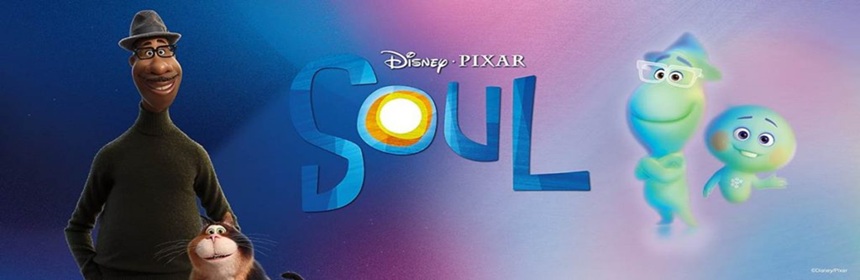
As mentioned in a previous blog post, I’ll be writing analysis content on all 28 of Pixar’s animated feature films and their film making eras.
The fourth era is the Personal Era, which is the current Era, and started in 2020 with Onward. As mentioned in a previous blog post, the Personal Era is known for its film releases being affected by the COVID-19 pandemic, its films being based on the personal lives of the directors and writers who were making them, and its varied animation.
So how did Soul measure up to the above features of the Personal Era?
Release being affected by the COVID-19 pandemic:
According to the film’s IMDb page, Soul is Pixar’s first film to not be released in movie theatres, but was instead released exclusively on Disney Plus. The film eventually had a traditional theatrical release in countries without Disney Plus where theatres were re-opened. In March 2024, Disney had provided a low-key theatrical release around Easter, after giving into public pressure.
The lack of theatrical release seemed to affect the film as it doesn’t seem to be remembered or talked about by people, at least according to the film’s director, Pete Docter. Docter stated that “very few people talk about Soul because it didn’t have the big theatrical impact. There’s something indisputable about that…it was such a joy to work on, and I felt disappointed that it came out and it got dropped into the ocean.”
Not only was the release affected by the COVID-19 pandemic, but the production was as well, with the animators working from home, which was acknowledged in the film’s end credits.
Being based on the personal lives of the directors and writers making the film:
According to the film’s Wikipedia page, part of the inspiration for the film’s plot came from Docter pondering the origins of human personalities with the concept of determinism. Docter also pitched the idea of a setting involving the astral plane and souls with personalities.
According to the film’s IMDb page, Joe’s story about working to achieve a singular goal, then wondering what to do with the rest of his life once he had, was inspired by Docter going through a similar experience after the massive success of Inside Out. Several aspects of Joe’s character was also based on co-director, Kemp Powers’ personal life.
According to the film’s IMDb page, the film’s themes of life, death and rebirth resonated with Powers as he accidentally shot and killed his best friend in the late 1980s.
According to the film’s Wikipedia page, in order to portray African-American culture accurately and respectfully, Pixar established and worked closely with an internal Cultural Trust, consisting of African-American consultants and Pixar employees.
Varied animation:
As I was watching the film, I could tell that there was a mixture of 2D and 3D animation, and I especially appreciated the animations of the portals between worlds.
According to the film’s IMDb page, the design of the souls were based on the definition of souls under various religions and cultures. The designs of the souls were varied, with the souls in The Great Before having a more baby-like appearance due to not having lived on Earth, the mentor souls having distinctive features due to having already lived a life on Earth, and 22’s design evolving as she did.
The film’s IMDb page also states that the scenes set on Earth are rendered realistically, mainly in Earth tones and lit warmly. I noticed this throughout the film, specifically that the colour palette seemed subdued. In comparison, The Great Before is brightly coloured, and the realm between Earth and The Great Beyond is in black and white.
In regards to the animation of Joe playing the piano, this was achieved by the animators copying the movements of musician, Jon Batiste.
The film’s IMDb page also states that Pixar was mindful of the history of racist imagery in animation, and set out to create characters who were recognizably African-American, whilst avoiding the stereotypes in old cartoons, as this film was their first with an African-American lead. According to the film’s co-director, Kemp Powers, the animators used lighting as a way to highlight ethnic diversity in the living world, and sought to capture the fine details of African-American characters, including but not limited to: hair texture, and the way light plays on the various tones of African-American skin.
My overall thoughts:
Overall, I enjoyed Soul, and found it moving in a similar way to Onward. I also felt it was a unique film due to its African-American lead, the focus on African-American culture, and its diverse characters. The cultural and racial diversity present throughout the film is something that I welcomed, enjoyed, and felt was long overdue.
I also felt that the film was unique due to the way they tackled the universal themes of life, death, rebirth, and the meaning of life. The writers tackled these themes with kindness, compassion, and an open-minded fashion, providing an audiences with a different way or perspective on how to view and think about life, death, rebirth, and the meaning of life.
I also appreciated the many comedic moments, mainly revolving around 22, Moonwind and Terry, as they broke up the universal and heavy themes of the film perfectly.
The next part of the Pixar Era Analysis series to be released will focus on Luca.
Fun Facts and Trivia (from the film’s IMDb page):
- 22 gets her name because she is the 22nd soul to have ever existed. To provide an indication on how long this has been, the soul that was named before her was in the hundred Billions.
- Joe Gardner is the first African-American main protagonist of a Pixar film.
- 22 is also the number of films that Pixar released before Soul.
- Pixar’s first film to be released on Christmas.
- Doc wanted to be a veterinarian before he became a barber. This may explain why he’s accepting of ‘Joe’ (22) wanting the cat (the real Joe) to stick around.
- The film takes place in a single day, except the final shot, which takes place the next morning. This illustrates that time in The Great Before doesn’t exactly matter nor is it linear.
- The closest thing to an antagonist in this film is Terry, as he does try to capture Joe and 22, however he is doing so because it’s his job, not out of any malice or hatred.
References:
 Loveday Writing