Pixar Era Analysis – Toy Story 4
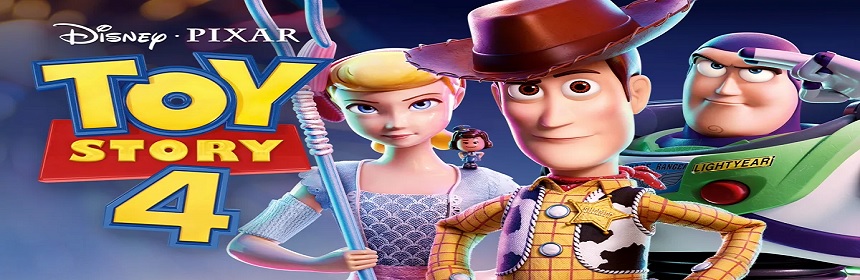
As mentioned in a previous blog post, I’ll be writing analysis content on all 28 of Pixar’s animated feature films and their film making eras.
The third era is the Experimental Era, which ran from 2011 to 2019 and started with Cars 2. As mentioned in a previous blog post, the Experimental Era is known for its large number of sequels, original films that thought outside the box, and an animation style perfected in each film rather than exploring new ground.
So how did Toy Story 4 measure up to the above features of the Experimental Era, and was it the right film to end the Era?
Large number of sequels:
Toy Story 4 is the fourth instalment of the Toy Story franchise. It is the sequel to Toy Story (1995, Golden Age), Toy Story 2 (1999, Golden Age), and Toy Story 3 (2010, Merger Era).
Original films that thought outside the box:
According to the film’s Wikipedia page, this film was not meant to be a continuation of Toy Story 3 and was written to be a romantic comedy, centred on the rekindled relationship between Woody and Bo Peep, a relationship that was hinted at in previous films. However, the script was later revised to focus more on Bo Peep’s return as an independent and happy “lost toy,” something Woody feared becoming throughout the series, and Woody’s world view being challenged, especially as Bonnie lost interest in playing with him, favouring her self-created spork toy, “Forky.”
After watching the film twice – once in cinemas when it was released in 2019 and this week for my Pixar Era Analysis series – the writers’ intentions outlined above make sense, as the focus is more on toys, less on the kids themselves, and seems to have a more sombre tone. Also, Woody’s desperation to be needed and played with by Bonnie has been compared to an empty nester parent.
According to the film’s IMDb page, one challenge that presented the writers with this instalment was whether to introduce and use technological toys, due to the advancements in toy technology in the near-25 years between the release of Toy Story and this film, in comparison to the advancements in toy technology between the 1950s and 1990s.
The film’s IMDb page also states that Bo Peep’s independence, empowerment and free spirit was meant to contrast Woody, who was just stuck in his way of being defined by his kid and room. The film’s IMDb page also states that Forky went through Lotso’s (from Toy Story 3) story arc in reverse – he started out thinking he was a piece of trash meant to be thrown away, but after spending time in the company of other toys and in the human environment, he came to understand his place as a toy to be loved by Bonnie.
Animation style perfected in each film rather than exploring new ground:
The film’s IMDb page states that over the years, the technology in the Toy Story films have become increasingly advanced, as the release dates of each film have been widely spread out. In this film, the animators went to the trouble of incorporating incredible detail with the toys, even if those details can’t be seen in every scene. Some examples of these details include but are not limited to: the bubbles in stickers, scratches from wear and tear, and the individually modelled and shaded objects in the antiques store that were meticulously positioned to appear as the though the store owner placed each one of them by hand. The film’s IMDb page emphasises that this attention and incorporation of detail shows how in-depth the animators on the films were willing to go to make the film look as good as possible.
Another major influence on the animation of this film was the animators surrounding themselves with toys during development and production for inspiration. Other major influences on the animation of this film included playing with certain toys to understand their movements, and a “forkshop” – a workshop that crew members participated in to design Forky.
My overall thoughts:
When I saw Toy Story 4 in cinemas five years ago, my first thoughts as the credits rolled were “it was a good film, but not a necessary one.” Five years on, my feelings haven’t changed.
Every film in the Toy Story franchise has told the story of toys from a different angle. Toy Story told the story of a favourite toy competing with the new, trendy toy. Toy Story 2 told the story of Woody’s origins, as well as focused on the dilemma of whether Woody should keep spending his limited days being loved by Andy, or spend his days being loved but not played with generations of children forever as a collector’s item. Toy Story 3 told the inevitable story of Andy growing up and giving away his toys to another child, Bonnie, for her to enjoy.
Toy Story 4’s angle was lost toys, and what being a lost toy actually means. Woody always feared being a lost toy and saw it as a bad thing, however Bo Peep saw and used being a lost toy as an opportunity to be free and independent, and Woody ultimately saw this for himself and chose to move on from Bonnie to the “lost toy” life. When I saw it five years ago and again for this Analysis Series, I had the same thought – it’s a good, unique angle and story to tell within the context of the franchise, however I didn’t feel it was a necessary story to tell, as its predecessor film brought the series and its story arc to a perfect close.
However, despite my thoughts above, watching the film for this Analysis Series, I’ve grown to appreciate the different tone this film set from its predecessors, as well as its evolved animation.
I also felt that Toy Story 4 was the perfect film to end the Experimental Era as it ultimately shows the evolution and progression of Pixar’s film-making, as well as of the Era itself.
The next part of the Pixar Era Analysis series to be released will focus on the Personal Era, and the first film within that Era, Onward.
Fun Facts and Trivia (from the film’s IMDb page):
- This film marks the first time in the series that Jessie and Bo Peep interact on screen.
- Tom Hanks and Annie Potts recorded some of their scenes together so they could fully develop Woody and Bo’s relationship.
- This film had the longest production cycle of any Toy story film to date.
- When Keanu Reeves came to Pixar to talk about the Duke Caboom character, he got so into the idea that he actually jumped up onto a table to illustrate just how this character might strike his poses.
- This film takes place only two years after Toy Story 3.
- Bonnie has clouds and blue skies on her wall in her room, just like Andy’s room.
- Almost every shot in the antiques store has something in the background from a previous Pixar film.
- Forky received instant popularity in online communities shortly after his reveal, with many people claiming to relate to his personality and insecurities.
- Pixar’s first film of the 2010s was Toy Story 3 and this film was their last one of the decade.
References:
 Loveday Writing