Pixar Era Analysis – Inside Out
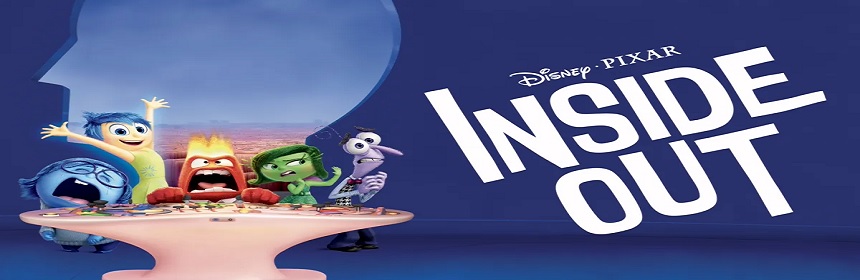
As mentioned in a previous blog post, I’ll be writing analysis content on all 28 of Pixar’s animated feature films and their film making eras.
The third era is the Experimental Era, which ran from 2011 to 2019 and started with Cars 2. As mentioned in a previous blog post, the Experimental Era is known for its large number of sequels, original films that thought outside the box, and an animation style perfected in each film rather than exploring new ground.
So how did Inside Out measure up to the above features of the Experimental Era?
Large number of sequels:
Inside Out is an original film, not a sequel. Although a sequel to this film was released earlier this year.
Original films that thought outside the box:
According to the film’s Wikipedia page, the idea from this film came from the director, Pete Docter’s, observations of his daughter, Elie, becoming more quiet and reserved and wondering what was happening with her internally, as this change in her was taking place. From there, the film’s plot unfolded and developed.
Docter stated that this film was one of the most challenging he’s ever made as it had to tell “what was going on with the girl and what is going on in her mind at the same time.”
According to the film’s IMDb page, the writers considered up to 27 emotions but eventually settled on the five that we see in the film. Some of the other emotions that were considered included but were not limited to: surprise, pride, and trust.
The film was also filled with details relating to its premise and concept, from having Anger reading a newspaper where the front page news reflected what was going on with Riley, to Riley’s clothing choice reflecting her depression, to the console expanding as Riley gets older, to the console becoming tinted with the respective colour of the emotion who was operating it.
Animation style perfected in each film rather than exploring new ground:
According to the film’s Wikipedia page, the film made increased use of an advanced sketching tool with which the animators performed rapid sculpting on silhouettes, altering the characters’ appearances and evaluating a “fine-tuning” cloth simulation. Through the simulation department, the motion of the characters’ hair and garments were added.
According to the film’s IMDb page, Riley’s mum’s Headquarters were the same as Riley’s, with the exception of orange curtains being added. The curtains were added so Riley’s Headquarters could be reused, so the animators didn’t have to animate a whole new setting. The curtains were also added to invoke the feeling of a talk show, with all the emotions sitting together and communicating.
Interestingly, this is the sixth Pixar film to use a combination of computer and traditional animation, specifically during the scene where Joy, Sadness and Bing Bong go through the Tunnel of Abstract Thought. The other five films to use a combination of computer and traditional animation were Monsters, Inc., The Incredibles, WALL-E, Brave, and Monsters University.
My overall thoughts:
Overall, I loved Inside Out and I think it’s Pixar’s best film so far, due to its original and unique layered premise, attention to detail, well-balanced comedic and dramatic moments, and the clear amount of homework the filmmakers did (by working with psychologists) to make a film about emotions and emotional intelligence for both kids and adults to enjoy.
The next part of the Pixar Era Analysis series will focus on The Good Dinosaur.
Fun Facts and Trivia (from the film’s IMDb page):
- Some of the memory balls in Riley’s mind contain scenes from other Pixar films, such as Carl and Ellie’s wedding in Up.
- The colours on Bing Bong’s flower represent the colours of the emotions: yellow for Joy, green for Disgust, red for Anger, blue for Sadness, and purple for Fear.
- The railings of the walkways and balconies in Riley’s Headquarters are in the shape of DNA strands.
- When the emotions of the cat are seen during the end credits sequence, the Disgust cat can be seen in the background puking up a hairball.
- Inside Riley’s Mum’s head, although Sadness makes all the decisions, it’s actually Joy who runs the console. When Sadness decides what they’re going to do, she gives an order to Joy, who then puts her hands on the console and, for example, signals Riley’s Dad across the dinner table.
- The distinct personalities of the different emotions were inspired by the dwarfs in Snow White and the Seven Dwarfs.
- Riley is shown as left-handed.
- It was Bill Hader’s suggestion that Fear should wear a bow tie.
- Joy is both Riley’s first-born emotion and the one in charge. This could be cause-consequence or just because she is the main protagonist.
- Over the course of the film, Joy experiences all five of the basic emotions: joy being her overall demeanour, anger at Sadness’ actions, disgust towards Riley’s dream boyfriend, fear towards Jangles the Clown, and finally sadness in the Memory Dump.
- Headquarters is located directly above the Memory Dump and is connected to the rest of the brain by thin hooks. This could imply that when a person dies, Headquarters will fall irredeemably to the Memory Dump, vanishing upon death.
- Riley’s Mum’s chief emotion is Sadness (acting as the more complex emotion of empathy) and Riley’s Dad’s chief emotion is Anger (acting as the more complex emotion of protectiveness).
References:
 Loveday Writing