Disney Era Analysis – Sleeping Beauty
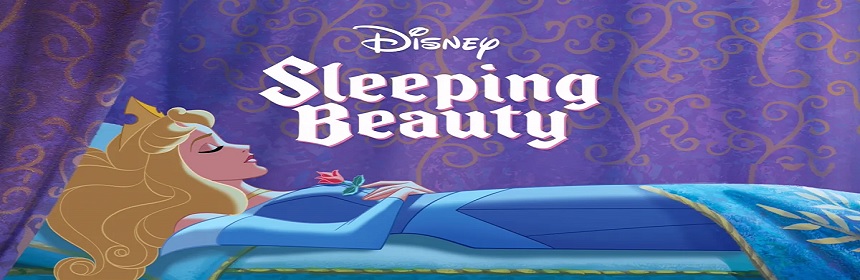
As mentioned in the first blog post in this series, I’ll be writing analysis content on all 60+ Disney animated feature films and their film making eras.
The third era is the Silver Age, which ran from 1950 to 1967 and started with Cinderella. As mentioned in a previous blog post, the Silver Age is also known as the “restoration age,” as the films during this era returned to Disney’s roots of feature-length narratives and adaptations of famous narratives, having high-art animation, being approachable (cartoonish gags, music from contemporary artists, and a lighter approach to storytelling), steering clear of intense scenes, and being heartwarming with happy endings, good morals, and catchy songs.
So how well did Sleeping Beauty measure up to these famous features?
Returning to Disney’s roots of feature-length narratives and adaptation of famous narratives:
Sleeping Beauty is based on Charles Perrault’s 1697 fairy tale of the same name.
Having high-art animation:
Walt Disney’s approach with the film was to have it be a moving illustration, and the animators followed this approach, with the art direction for the movie inspired by European paintings and French medieval tapestries.
According to the film’s IMDb page, Eyvind Earle was on charge of the colour styling, background design, and overall look of the film, even painting the great majority of the production backgrounds. Earle’s modernistic approach to design and painting resulted in the film having a bold, unique art style. Due to Earle’s art style as well as needing to cater to the widescreen process, animation was a lot slower, with background paintings taking a week or more to paint, and character animators being only capable of producing one drawing of characters a day.
The film’s IMDb page also states that the animation of the dragon’s head movements were based on those of a rattlesnake about to strike. According to the film’s Wikipedia page, live action modelling was used for animation.
The film’s IMDb page also states that this was the last Disney feature to have cels inked by hand. From 101 Dalmatians onwards, the cleaned-up pencil drawings were xeroxed onto the cels. However, some of the scenes in this movie did use the xerography process.
Being approachable (cartoonish gags, music from contemporary artists, and a lighter approach to storytelling):
Cartoonish gags:
Some of the cartoonish gags in the film include Prince Phillip landing in the water after being thrown in the air by Samson, the tree trunk with the birds slumping after Aurora reveals she dreamed about meeting Prince Phillip, the squirrel throwing acorns at the other forest animals with the accompanying xylophone soundtrack, and Flora and Merryweather turning Aurora’s dress from pink to blue and back again repeatedly.
Music from contemporary artists:
The majority of the film’s soundtrack is derived from Tchaikovsky’s ballet of Sleeping Beauty and adapted by composer, George Bruns. George Bruns also composed original songs for the film, with lyricist, Tom Adair.
A lighter approach to storytelling:
I believe that Disney’s combination of the art style and motifs of the middle ages and 1950s point of view, as well as Disney’s animation provided the film’s lighter approach to storytelling.
Steering clear of intense scenes:
This film definitely didn’t steer clear of intense scenes. Some of the intense scenes included Maleficent’s appearance at the beginning of the film, Maleficent attacking her minions, Prince Phillip’s battle with Maleficent’s minions, and the final battle between Maleficent and Prince Phillip.
Being heartwarming with happy endings, good morals, and catchy songs:
Sleeping Beauty’s heartwarming nature lies in the relationship Aurora has with the three good fairies, as well as her romance with Prince Phillip, with the happy ending being his kiss waking her from cursed slumber.
Some morals that can be taken from the film include: true love can conquer all, that a loving family can be made and found, and that good triumphs over evil.
In terms of catchy songs, I personally found “Hail to the Princess Aurora,” “Skumps,” and “Once Upon a Dream” to be the catchiest.
My overall thoughts:
Overall, I felt that the tapestry and artistic animation of this film, as well as Disney’s choice to have the art style match the story’s setting, made Sleeping Beauty stand out amongst its Silver Age predecessors. Although I appreciate the mastery of the art and animation, I did find the colour palette to be a little over-the-top at times.
According to the film’s IMDb page, Walt Disney’s constant mantra to the animators was that the film could not be like Snow White and the Seven Dwarfs. I believe his mantra failed to be take on by the animators as many scenes of Sleeping Beauty reminded me of Snow White and the Seven Dwarfs, and the animation of the film reminded me of Disney’s other past films, including the Wartime Era films.
I also found it interesting that this was the first animated film to use the Super Technirama 70 widescreen process. This is the second film in the Silver Age to be made in widescreen and use pioneering filmmaking techniques.
Whilst I enjoyed the film and it’s unique artistic and animation style, I can’t say it was my favourite film in the Silver Age, as I found it was sometimes hard to stay engaged with the story at times.
The next part of the Disney Era Analysis series will focus on 101 Dalmatians.
Fun Facts and Trivia:
- According to the film’s IMDb page, the running gag of Flora and Merryweather arguing about whether Aurora’s dress should be pink or blue originated from the filmmakers’ problem as to deciding just that.
- This was the last fairy tale produced by the studio until The Little Mermaid.
- Aurora only has about 18 lines of dialogue and only appears for about 18 minutes of the film.
- The fairytale book used in the beginning of the film was real and was handmade by Eyvind Earle.
- Queen Leah is the first mother of a Disney Princess to be alive during the film. This would not happen again until Mulan.
- This is the only Disney film with square trees.
- This was the final Disney animated film to have the story written by multiple people.
References:
 Loveday Writing