Pixar Era Analysis – Cars 2
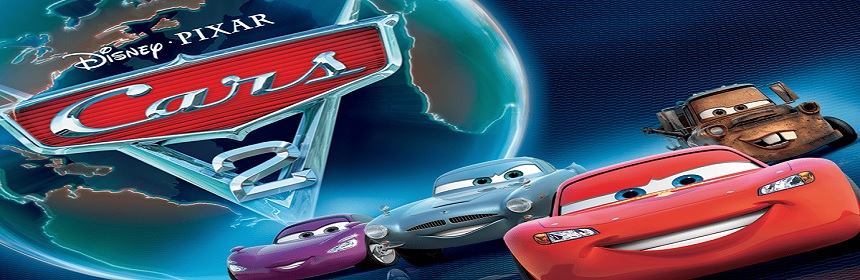
As mentioned in a previous blog post, I’ll be writing analysis content on all 27 of Pixar’s animated feature films and their film making eras.
The third era is the Experimental Era, which ran from 2011 to 2019 and started with Cars 2. As mentioned in a previous blog post, the Experimental Era is known for its large number of sequels, original films that thought outside the box, and an animation style perfected in each film rather than exploring new ground.
So how did Cars 2 measure up to the above features of the Experimental Era, and was it the right film to kick off the era?
Large number of sequels:
Cars 2 is the sequel to Cars, released in 2006 and the first film of the previous era, the Golden Age. Interesting how this is the second Pixar era to kick off with a Cars film.
Original films that thought outside the box:
While this is a sequel film, it had an original plot that thought outside the box – one of its characters being mistaken for a spy and essentially being forced to work as one, whilst the other characters are attending an international grand prix.
According to Pixar’s dedicated web page on Cars 2, the film’s Director, John Lasseter, had the film start off with Finn on his mission as he wanted to start the film off with something that was the complete opposite of what the audience would expect from the sequel.
Animation style perfected in each film rather than exploring new ground:
According to Pixar’s dedicated web page on Cars 2, the approach the production team took when designing the world was to caricature and “car-ify” each country, with the intention of celebrating each location in the most beautiful way possible.
The web page also states that setting the film’s opening race in Tokyo at night allowed the animators to showcase a rich and beautiful range of light sources. The race in London provided the animation team with their biggest challenge, as it required animating over 50 miles of city streets and “car-ified” buildings of different architectural styles.
The web page also states that separate colour palettes were used to capture the different atmosphere of each location and overall mood of the story.
According to the film’s IMDb page, this film was the last to be animated in Pixar’s animation software, Marionette, which was succeeded by a new program called Presto.
My overall thoughts:
Overall, whilst I did end up enjoying Cars 2 by the end, I can see why it was criticised and is regarded as one of Pixar’s worst films. I felt that the sequel being a Mater-focused spy film was over-the-top, in comparison to its predecessor’s modest, simple, yet heartwarming and effective plot and settings.
Not only was the film criticised by critics and audiences, but even by Pixar itself. According to the film’s IMDb page, Pixar disowned the film since its release, which is possibly why its successor, which would be released six years later, had little to no reference to this film. Whilst Larry the Cable Guy, Mater’s voice actor, has said that the film was more of a Mater tale and it really had nothing to do with the other Cars films, suggesting that the events of this film are non-canon.
In terms of kicking off the Experimental Era, I feel that Cars 2 was the right choice, as it is the sequel to the first film, which kicked off the previous era, and this film led to Cars becoming Pixar’s second franchise. It also showed one result of Pixar’s experimentation with its films, in this case changing the protagonist, setting, and genre – failure. Failure with the audience, critics, and themselves.
It will be interesting to see where the Experimental Era goes from here.
The next part of the Pixar Era Analysis series will focus on Brave.
Fun Facts and Trivia:
- According to the film’s IMDb page, the Queen is a classic 1950s Rolls-Royce Phantom IV and Prince Wheeliam is a Bentley Continental GT.
- This film was Pixar’s first film to not receive any Academy Award nominations.
References:
 Loveday Writing