Pixar Era Analysis – Finding Nemo
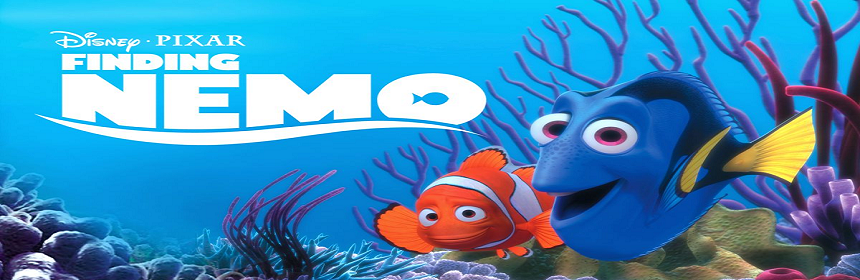
As mentioned in a previous blog post, I’ll be writing analysis content on all 27 of Pixar’s animated feature films and their film making eras.
The first era is the Golden Age, which ran from 1995 to 2004 and started with Pixar’s debut animated feature film, Toy Story. As mentioned in a previous blog post, the Golden Age is known as the Age where Pixar pioneered and highlighted their then-new technological style, and made films that focused on great attention to detail and storytelling, with each film evolving from the previous one, with their debut film, Toy Story, setting the precedent. The films in this Age also focused on themes of hope, happiness, and togetherness.
So how did Finding Nemo measure up to the above features of the Golden Age?
Pioneered and highlighted their then-new technological style:
Finding Nemo is Pixar’s first underwater film, which provided new storytelling and animating opportunities.
For the animation to be both as aesthetically pleasing and accurate as possible, the production crew were sent on visits to aquariums, on diving stints in Monterey and Hawaii, study sessions in front of Pixar’s 25-gallon fish tank, and sat in on a series of in-house lectures from an ichthyologist (a marine biologist/zoologist who specialises in fish). Not only that but the production crew had to get SCUBA certification and go on research trips to the Great Barrier Reef, on the insistence of John Lasseter. This extensive research definitely paid off as Finding Nemo was the first Pixar film to win the Academy Award for Best Animated Feature in 2004 and the art team’s water, both under and above were so realistic that they were deemed too realistic for an animated film.
According to IMDb, rendering a frame (at a resolution of 1600×900) lasting about 1/24th of a second would take up to four days due to the complexity of the underwater environment, especially sunlight coming through the water and hitting fish scales. Pixar’s Ocean Unit also created an entirely new shading system which they called “transblurrency” which is see-through but blurred, much like a frosted bathroom window. The waving strands on the anemones on the seabed move about using the same computer program that animated Sulley’s hair in Monsters, Inc.
Made a film that focused on great attention to detail and storytelling:
According to IMDb, two experiences in Andrew Stanton’s (the film’s director) life shaped the storytelling of the film – trips to the dentists he went on as a child and being fascinated by the aquarium there, and realising that he was naturally overprotective of his young son.
Marlin’s overprotectiveness, which ultimately drives Nemo away and leads to his kidnapping, comes from the trauma of losing his wife, Coral, and their hundreds of unborn children at the beginning of the film. You could also argue that the film opens like a horror film, everything is fine at first but the protagonists are suddenly attacked, with the survivor traumatised. According to IMDb, Stanton originally planned to reveal Coral’s fate through flashbacks as the main story unfolded, however this didn’t go down well with audiences during test screenings, so he made the decision to tell Marlin’s backstory at the beginning of the film to make him more appealing and his overprotectiveness understandable to the audience.
The aquarium inspiration ultimately leads to more storytelling possibilities – it’s another underwater environment to explore, it enables for Nemo’s character development into a strong and confident child, and it also enables the introduction of secondary characters in the fish tank gang.
There was a lot of noticeable foreshadowing throughout the film. When Nemo mentions a friend of his meeting a sea turtle, Marlin mentions that he’ll ask a sea turtle how long they live for whenever he meets one, and does so when he meets Crush. When Nemo is caught in the net by the dentist before he is put in the plastic bag for Darla, Gus encourages him to swim down, which leads to him being able to escape, and Nemo uses this experience to free Dory and the school of fish from the fishermen at the end of the film. This film also explore darker and more adult tones in comparison to the previous films such as the loss of a parent, trauma, and kidnapping.
The attention to detail in the film reflects the storytelling outlined above. As well as the aquarium visits, diving stints, study sessions, in-house lectures and SCUBA certification, animators also studied dogs’ facial expressions and eye movements to animate the facial expressions of the fish in the film. Most of the fish in the film are saltwater fish that can be found in the Pacific Ocean, and a sequence used when Dory and Marlin first meet is used again when they are inside the whale.
Setting the precedent for future films:
Once again this film provided a subtle preview of Pixar’ s next film, The Incredibles, by showing a kid in the dentist’s waiting room reading a Mr. Incredible comic book.
Themes of hope, happiness, and togetherness:
Hope – The theme of hope is strong in this film with Marlin never losing hope that he will find Nemo alive until he sees him “dead” in the dentist’s office. In contrast, Nemo feels he has no hope in being found by Marlin, due to Marlin’s fear of the ocean. Gus’ plan provides him with hope that he can escape back into the ocean. Also throughout the film, there are times where Marlin overcomes one obstacle and we are filled with hope that he is getting closer, only for another obstacle to get in his way.
Happiness – Happiness is present at the start of the film between Marlin and Coral, before the barracuda attacks them. While both Marlin and Nemo experience brief moments of happiness during their respective journeys, they are not truly happy until they are eventually reunited and safe again. The end of the film shows that they have a happier and healthier relationship, with Marlin in particular softening and relaxing.
Togetherness – Togetherness is another strong theme, with Marlin and Coral and then Marlin and Nemo together at the start of the film, only to be split up. From there, Marlin and Dory are paired off to find Nemo, and Nemo finds a group of supportive friends with the tank gang, with Gus filling the father-figure role in place of Marlin, albeit with tougher love but more encouragement.
On a smaller note, the three sharks: Bruce, Chum and Anchor, are three best friends and are in an AA-like program to stop eating fish. They are seen easily welcoming Marlin and Dory in their group, with Dory remaining friends with them and a part of their program at the end of the film.
Once Marlin and Nemo are reunited, Dory becomes an unofficial member of their family, and the film ends with the tank gang finally escaping the dentist’s office together.
My overall thoughts:
Overall, I feel that Finding Nemo is the best film of the Golden Age so far as the underwater environments, both in the ocean and in the fish tank, provided Pixar and their crew with more animation, artistic, and storytelling opportunities. Due to the vast variety of ocean and fish life, a variety of characters could be created and introduced to audiences.
The storytelling and the attention to detail was pretty much perfect, with the two going hand-in-hand thanks to intense research behind the scenes and foreshadowing throughout the film. I also felt that the comedic moments were well interspersed with the dramatic and emotional moments.
The next part of the Pixar Era Analysis series to be released will focus on The Incredibles.
Fun Facts and Trivia:
- The dentist’s diploma is from the Pixar University School of Dentistry.
- Demand for tropical fish exploded right after the film’s release, although the population of these fish decreased with this demand as new pet owners couldn’t care for them properly. As well as this, the number of people releasing their pet fish based on the line of dialogue “all drains lead to the ocean” increased, however despite the pet owners’ best intentions, the fish would die before reaching the sewers.
- The Pizza Planet truck has a distinctive appearance in this film – the Australian setting meant that it had to be a right-handed vehicle driving on the left side of the road.
- Dory never says Marlin’s name in the whole film, despite being with him for most of it.
- Finding Nemo is the best selling DVD of all time in the world, with 41 million copies sold.
- Geoffrey Rush (Nigel) held onto to his tongue as he said his lines during the scenes when Nigel had Marlin and Dory in his mouth.
- Coral is the first female Pixar character to die.
- Pixar’s first film not to take place in or around North America.
- Allison Janney’s (Peach) first animated feature film.
References:
 Loveday Writing