Disney Era Analysis – The Three Caballeros
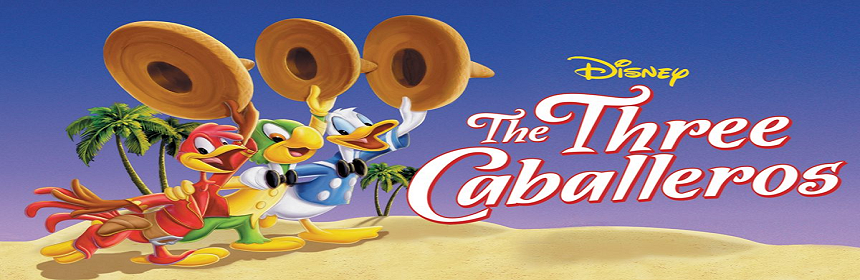
As mentioned in the first blog post in this series, I’ll be writing analysis content on all 60+ Disney animated feature films and their film making eras.
The second era is the Wartime Era, which ran from 1943 to 1949 and started with Saludos Amigos. As mentioned in a previous blog post, the Wartime Era is also known as the “package era” as the films during this era were famous for consisting of multiple segments or short films with varying plots (or sometimes no plots at all) that were put together, as opposed to being a film focusing on or telling one concrete story. This era was also known for combining live action with animation. This era was also known for showing how World War II affected the Walt Disney Animation Studios.
So how well did The Three Caballeros measure up to these famous features and was it the right follow-up to Saludos Amigos?
Consisting of multiple segments or short films with varying plots (or sometimes no plots at all) that were put together:
The Three Caballeros consisted of seven different segments: The Cold-Blooded Penguin, The Flying Gauchito, Baia, Las Posadas, Mexico: Patzcuaro, Veracruz and Acapulco, You Belong to My Heart, and Donald’s Surreal Reverie. The segments were broken up with Donald Duck opening presents for his 10th birthday (this film was released on the 10th anniversary of his creation).
The Cold-Blooded Penguin:
This segment focuses on a penguin named, Pablo, who prefers the warmer climate over the freezing conditions of Antarctica. After a few false starts, he manages to leave Antarctica, navigating through the coast of Chile, passing by Peru, and eventually landing at the Galapagos Islands. Pablo sets up a life for himself and is initially happy, only to start missing Antarctica and starts to contemplate going back there.
The Flying Gauchito:
This segment is set in the Pampas of South America, a little gauchito from Uruguay prepares to go hunting for condors in the mountains. He finds a nest which he thinks has a condor, but instead finds a winged burro/donkey. The gauchito decides to train the winged burro to win races, however when they enter one, they are immediately left behind by the other racers. The little gauchito cuts the rope he holds the burro buy, he flies past the other racers and wins, although doesn’t take the prize with him when he flies away.
Baia:
This segment has Donald Duck and Jose Cariocha taking a pop-up book trip through the Brazilian state of Baia, they meet up with the locals and dance with them, with Donald pining over Yaya (portrayed by Aurora Miranda, sister of Carmen Miranda). This segment is the first one to feature live action.
Las Posadas:
This segment focuses on the story of a group of Mexican children who celebrated Christmas by re-enacting the journey of Mary and Joseph searching for a room at the inn. Posada in English meant “inn” or “shelter” and each place they tried, they were told by the owners “no posada.” When they eventually found shelter in a stable, it was celebrated by festivities, such as breaking the pinata. This leads to Donald Duck being taught how to break a pinata by Panchito, although Panchito tries to make it harder for him by being cheeky.
Mexico: Patzcuaro, Veracruz and Acapulco:
This segment has Panchito give Donald and Jose a tour of Mexico on a flying sarape/carpet. During the segment, Donald tries to gain the attention and affection of the ladies on the beach in Acapulco, only to fail and be laughed at.
You Belong to My Heart:
This segment has the Mexican skies showing Dora Luz’s angelic face and voice, which results in Donald Duck falling in love with her.
Donald’s Surreal Reverie:
This segment has Donald Duck “drunk on love,” which leads to surreal animation, reminiscent of Pink Elephants on Parade. Donald then dances and sings with Carmen Molina, alongside animated cacti.
The segment and the film ends with Panchito and Jose appearing and spicing things up, with Donald battling a toy bull that appeared earlier and fireworks being released. The fireworks, in the colours of the Mexican, Brazilian, and U.S. flags spell out the words ‘the end’ in Spanish, Portuguese, and English respectively.
Combining live action with animation:
This film contained more live action combined with animation, with the animated characters interacting with the live action ones, as opposed to its predecessor, Saludos Amigos, which only contained live action of the Disney staff, as means to break up the segments.
Showing how World War II affected the Walt Disney Animation Studios:
According to IMDb, this film as well as Saludos Amigos, were made by Disney in order to improve the relationship between the U.S. and South American countries during World War II, especially as some South American countries were starting to sympathise with Nazi Germany.
This was also the last animated feature film to be released during World War II.
My overall thoughts:
Overall, I felt that this was a more light-hearted film revolving around Central and South America, as opposed to the previous film. Saludos Amigos was more documentary-like than this film, and this film combined the live action and animation pretty well considering the limited technology during this period of time (although the limitations do show with the animation quality quickly diminishing when live action and animation combined was first shown onscreen in the film).
Admittedly, I did find that some of the segments were hard to stay engaged with, however it was still a lot of fun.
The next part of the Disney Era Analysis series will focus on Make Mine Music.
Fun Facts and Trivia:
- Caballero means ‘gentleman’ or ‘knight’ in Spanish.
- This film introduces Panchito as a co-star to Donald Duck and Jose, making him the first Mexican Disney animated feature film character.
- This was the only film from the Wartime Era to receive any theatrical reissues.
- As they had done with Saludos Amigos, Disney’s team of animators travelled to Mexico to “soak up the culture” and create reference material.
- Donald Duck’s birthday is listed as” Friday 13th”, although no month is specified.
References:
 Loveday Writing